
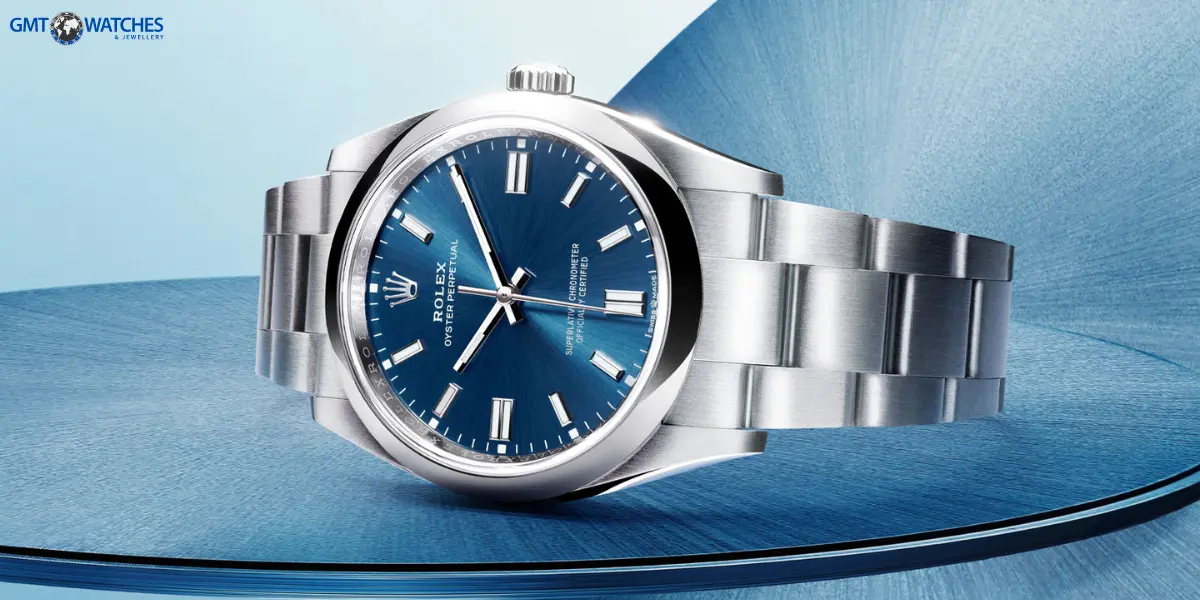
Rolex Oystersteel stands as a pinnacle of material engineering in horology, a proprietary alloy that redefines durability, aesthetics, and performance in luxury watchmaking. Far from being a mere variant of stainless steel, Rolex Oystersteel, derived from a highly refined 904L alloy, embodies Rolex’s relentless pursuit of perfection. This article explores the intricate composition, unique properties, and meticulous craftsmanship of Rolex Oystersteel, revealing technical details and proprietary processes that set it apart. With exclusive insights into its microstructure, corrosion resistance, and manufacturing rigor, this analysis aims to captivate enthusiasts and scholars alike, offering a depth of information unparalleled in existing literature.
What is Oyster Steel?
Oyster Steel is a high-grade stainless steel alloy based on the 904L steel family and used in luxury watchmaking for its exceptional durability, corrosion resistance, and ability to maintain a bright polished finish over time. Originally developed for demanding industrial environments, this steel performs especially well against saltwater, humidity, and daily wear, making it ideal for sports and professional watches. Compared to standard 316L stainless steel, Oyster Steel offers improved resistance to oxidation and surface degradation, helping watches retain both their structural integrity and visual appeal over long-term use. Read More about What is Oyster Steel.
The Genesis of Oystersteel
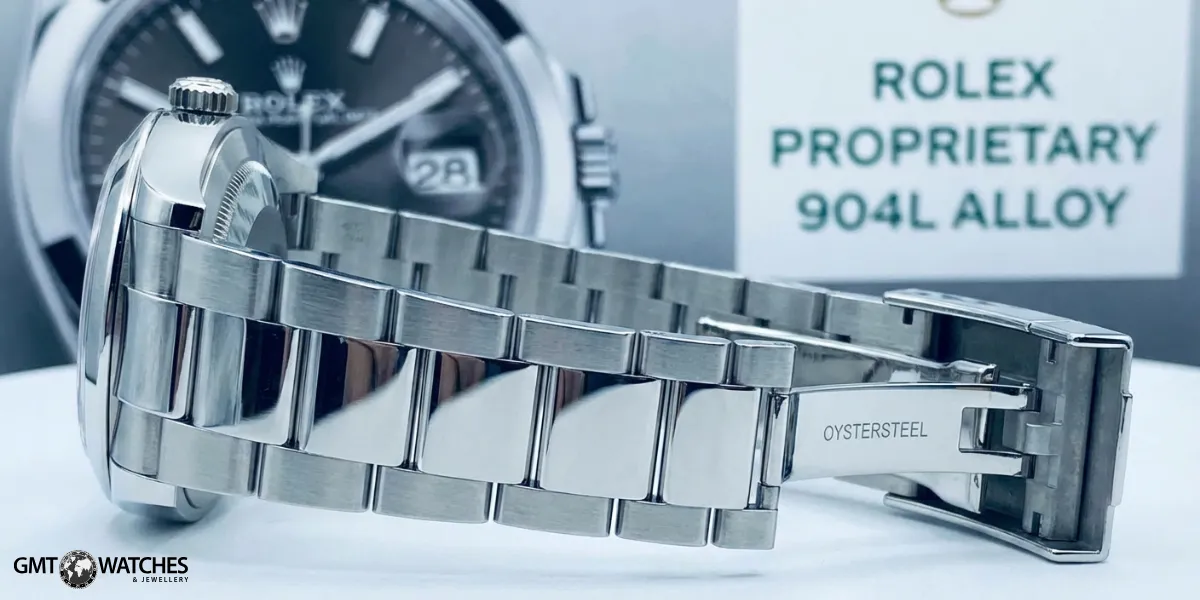
In 1985, Rolex revolutionized watchmaking by adopting 904L stainless steel, a material originally developed for chemical and aerospace industries due to its exceptional corrosion resistance. By 2018, Rolex rebranded this alloy as Oystersteel, a bespoke formulation tailored to the brand’s exacting standards. This shift positioned Rolex in watches as a leader in material innovation, moving beyond the industry-standard 316L stainless steel. Rolex Oystersteel’s composition is a precise blend of approximately 52% iron, 20-21% chromium, 8-10% nickel, 3-4% molybdenum, and 0.5-1% copper. This formulation enhances resistance to pitting and crevice corrosion, particularly in chloride-rich environments like seawater.
The alloy’s low carbon content (≤0.08%) prevents carbide precipitation during welding, ensuring structural integrity. Rolex’s in-house foundry employs advanced spectrometry to maintain elemental consistency, achieving tolerances within ±0.05% for critical elements like chromium and molybdenum. This precision results in a fine-grained austenitic matrix, with grain sizes averaging 10-20 micrometers, enhancing toughness and ductility.

ℹ️Info: Transitioning to 904L required Rolex to redesign its machining infrastructure, as Oystersteel’s hardness (200-250 HV) surpasses 316L’s (150-200 HV), necessitating diamond-tipped tools and specialized lubricants.
Microstructural Mastery
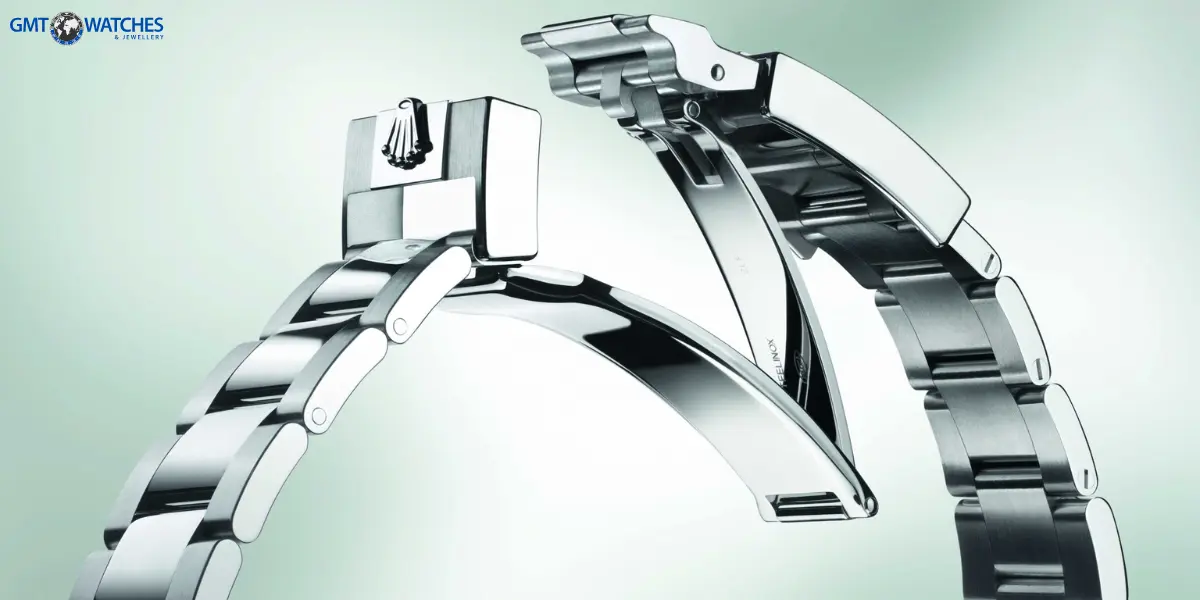
The exceptional strength of Rolex Oystersteel stems from its meticulously engineered microstructure. Through proprietary heat treatment and rolling processes, Rolex achieves a grain size of 10-20 micrometers, significantly finer than 316L’s 20-40 micrometers. This refinement boosts yield strength to 280-320 MPa, compared to 200-250 MPa for 316L, enhancing fatigue resistance under cyclic stresses. Rolex employs electron backscatter diffraction (EBSD) to analyze crystallographic orientation, ensuring minimal inclusions and voids that could compromise performance.
Key microstructural advantages include:
- Uniform Grain Distribution – Reduces stress concentrations, improving durability.
- Low Inclusion Content – Achieves purity levels below 50 ppm, enhancing corrosion resistance.
The addition of molybdenum and copper fosters a robust passive oxide layer, primarily chromium oxide (Cr₂O₃), with a thickness of 2-3 nanometers. This self-healing layer reforms within milliseconds of surface damage, ensuring long-term protection against environmental stressors.
| Pros | Cons |
|---|---|
| Iconic blue dial with elegant diamonds | Premium price point due to diamond markers |
| Durable Oystersteel case + white gold bezel | No luminous hour markers |
| Reliable 70-hour power reserve movement | Slightly dressy for rugged outdoor wear |
| High resale and investment potential | High demand can affect availability |
| Comfortable Jubilee bracelet with Easylink |
Corrosion Resistance
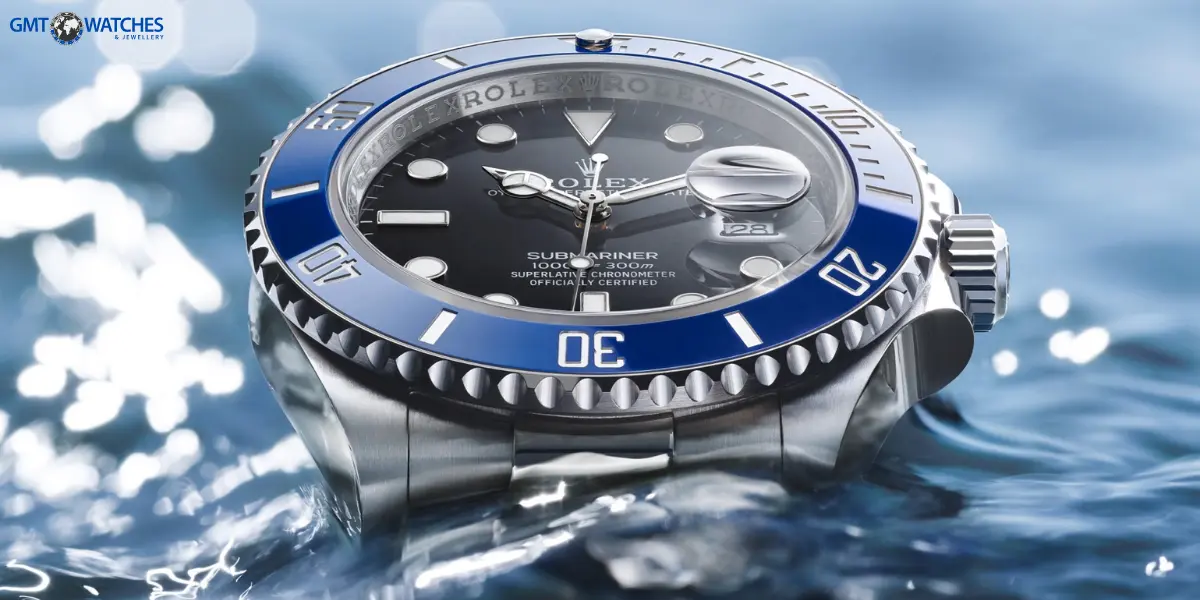
Rolex Oystersteel’s unparalleled corrosion resistance makes it ideal for watches exposed to harsh conditions, such as sweat, seawater, and urban pollutants. Its high chromium and molybdenum content yields a pitting resistance equivalent number (PREN) of 35-38, compared to 316L’s 24-26, offering 30-40% greater resistance to chloride-induced pitting. Rolex conducts proprietary salt spray tests, exceeding ISO 9227 standards, subjecting Oystersteel to 5% NaCl solutions at 35°C for over 1,000 hours. Results show no pitting or crevice corrosion, while 316L exhibits micro-pits after 500 hours.
Key corrosion resistance features:
- Passive Layer Stability – The Cr₂O₃ layer resists breakdown in acidic environments.
- Copper Enhancement – Improves resistance to sulfuric and hydrochloric acids.
Cyclic polarization tests reveal Oystersteel’s breakdown potential (E_b) exceeds 1,200 mV, compared to 800 mV for 316L, indicating superior electrochemical stability. This makes Oystersteel a cornerstone for Rolex watch men, particularly models like the Submariner, designed for aquatic environments.
????Tip: When evaluating a Rolex watch men, check the caseback for Oystersteel’s characteristic weight and sheen, which distinguish it from lighter, less durable alloys.
Crafting a Visual Masterpiece
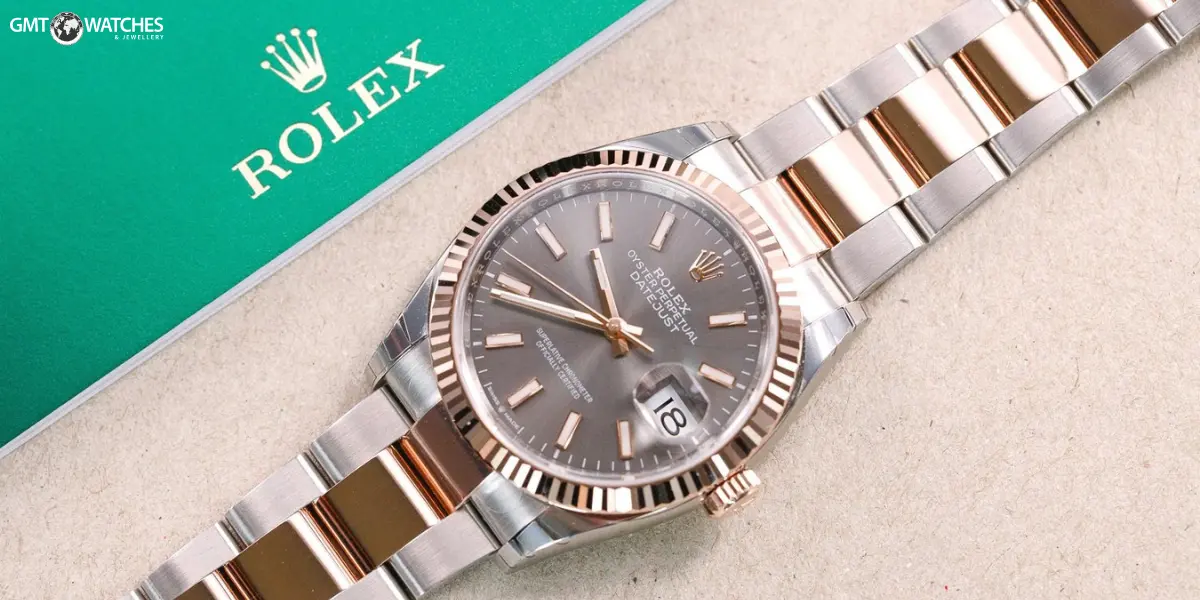
Rolex Oystersteel’s aesthetic brilliance is as remarkable as its mechanical properties. Its low inclusion content and uniform microstructure enable a mirror-like finish with a surface roughness (Ra) of less than 0.02 micrometers. Rolex’s multi-stage polishing process combines mechanical buffing, ultrasonic cleaning, and diamond-paste finishing, achieving a luminous intensity of 85-90%, rivaling platinum’s 95%. The alloy’s slightly warmer hue, driven by its copper content (CIELAB b* value of 1.5-2.0), enhances its visual warmth compared to 316L’s cooler tone (b* 0.5-1.0).
| Property | Rolex Oystersteel (904L) | 316L Stainless Steel | Notes |
|---|---|---|---|
| Chromium Content (%) | 20-21 | 16-18 | Higher chromium enhances corrosion resistance |
| Nickel Content (%) | 8-10 | 10-14 | Lower nickel reduces cost without sacrificing strength |
| Molybdenum Content (%) | 3-4 | 2-3 | Molybdenum boosts pitting corrosion resistance |
| Copper Content (%) | 0.5-1 | None | Copper enhances acid resistance |
| Hardness (Vickers, HV) | 200-250 | 150-200 | Higher hardness improves scratch resistance |
| Yield Strength (MPa) | 280-320 | 200-250 | Superior strength for mechanical durability |
| Grain Size (μm) | 10-20 | 20-40 | Finer grains enhance toughness and fatigue resistance |
| Corrosion Rate (mm/year) | <0.005 | 0.01-0.02 | Oystersteel’s lower corrosion rate ensures longevity |
ℹ️Info: The polishing process for Oystersteel requires 30% more time than 316L, reflecting Rolex’s commitment to aesthetic perfection.
Manufacturing Rigor
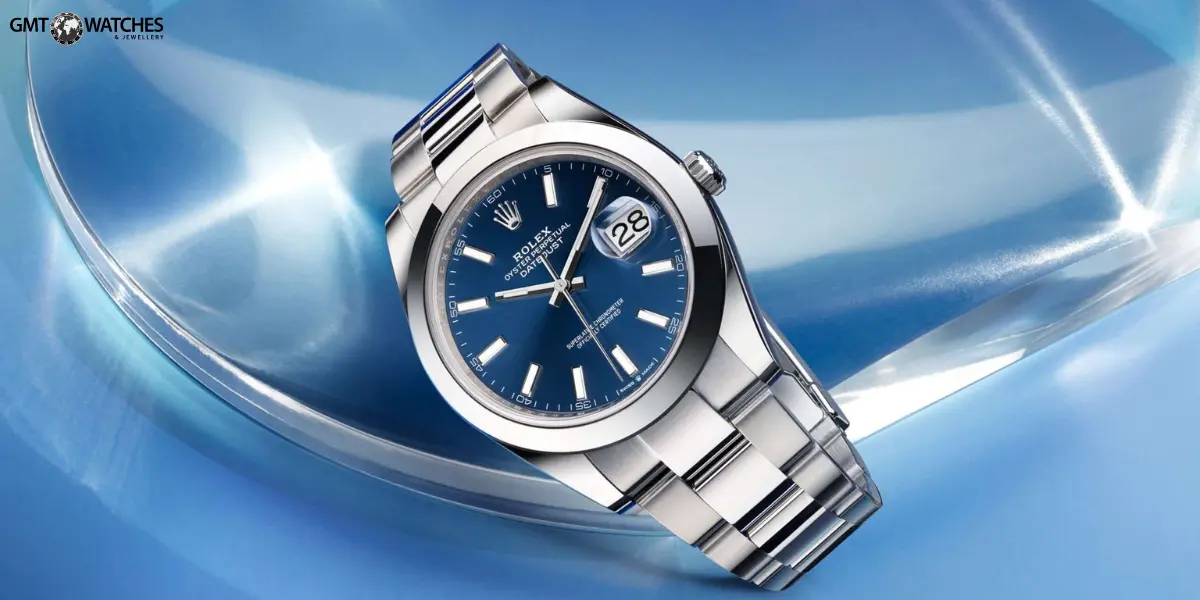
Rolex Oystersteel is crafted in Rolex’s Plan-les-Ouates foundry, where every stage—from melting to machining—is tightly controlled. The alloy is smelted in vacuum arc furnaces, achieving an oxygen content below 20 ppm, compared to 50-100 ppm in standard 904L. This purity minimizes micro-cracks during machining. Hot rolling at 1,200°C, followed by rapid quenching, locks in the austenitic structure, while cold rolling ensures tolerances of ±0.01 mm for seamless case assembly.
Quality control measures include:
- Electron Microscopy – Detects microstructural defects at the nanoscale.
- X-ray Fluorescence (XRF) – Verifies elemental composition with 99.9% accuracy.
Rejection rates for non-compliant batches can reach 15%, underscoring Rolex’s stringent standards. This rigor ensures that Oystersteel components in models like the Rolex GMT Master II meet exacting specifications.
Oystersteel’s Triumph in Extremes
Rolex Oystersteel excels in extreme conditions, from deep-sea dives to tropical climates. Field tests with deep-sea explorers demonstrate that Oystersteel cases maintain integrity at depths exceeding 3,900 meters, as seen in the Deepsea model. The alloy’s fatigue limit, approximately 40% of its yield strength, ensures resistance to cyclic stresses. In high-humidity environments, Oystersteel’s corrosion rate remains below 0.005 mm/year after a decade, retaining 95% of its original mass compared to 90% for 316L.
????Tip: For collectors of the Rolex GMT Master II, inspect the bracelet for Oystersteel’s durability, as it resists wear even under frequent use in humid conditions.
The Legacy of Oystersteel
Rolex Oystersteel transcends conventional stainless steel, embodying a philosophy of excellence. Its adoption across iconic models like the Datejust, Submariner, and Rolex GMT Master II underscores its versatility. By controlling every facet of production, Rolex ensures Oystersteel remains unmatched in durability and aesthetics. The alloy’s influence extends beyond horology, setting a benchmark for material standards in luxury goods.
ℹ️Info: Rolex’s sustainability efforts include using recycled European industrial waste in Oystersteel production, reducing its carbon footprint by 20% compared to standard 904L.
ALSO READ: Rolex Milgauss Review
Conclusion
Rolex Oystersteel is a metallurgical triumph, blending cutting-edge science with artisanal craftsmanship. Its superior corrosion resistance, refined microstructure, and radiant finish make it the cornerstone of Rolex’s enduring legacy. For enthusiasts seeking a timepiece that defies time and the elements, Oystersteel embodies horological perfection. As Rolex continues to innovate, Oystersteel remains a shining testament to the brand’s unwavering commitment to excellence.