
There’s a certain pattern you start noticing when you pay attention to watches in the UAE. It’s not loud in the way people expect. It’s not always about showing the most expensive piece in the room. It’s more controlled than that, almost intentional. The watch becomes part of a wider image, tied to identity, influence, and sometimes even responsibility rather than just wealth.
When people search for UAE Celebrities and their watches, they usually expect a predictable list of luxury brands. Rolex, Richard Mille, maybe a bit of Patek Philippe. That part is true, but it misses the more interesting layer. The choices aren’t random. They reflect personality, background, and how each individual wants to be perceived in a country where image is curated carefully but rarely feels forced.
Why Watches Matter More in the UAE Than You Think
In many places, watches are either functional or purely status-driven. In the UAE, they sit somewhere in between. There’s a cultural awareness of presentation, but it’s not exaggerated. It’s subtle, and that’s where it gets interesting.
You’ll notice that public figures often avoid overly flashy combinations unless it aligns with their persona. A royal figure won’t wear the same watch as a young influencer, even if both can afford it. That distinction isn’t accidental. It reflects how different roles in Emirati society carry different expectations, and watches quietly reinforce those expectations without needing explanation.
Hussain Al Jassmi
Hussain Al Jassmi (Arabic: حسين الجسمي) is an Emirati singer, composer, and pianist celebrated for blending modern Arabic pop with traditional Gulf sounds. Born in 1979 in Khorfakkan, United Arab Emirates, he is among the Arab world’s most influential and admired artists, known for his emotive voice and humanitarian spirit.
Key facts:
- Full name: Hussain Jumaa Al Jassmi
- Born: August 25, 1979, Khorfakkan, UAE
- Genres: Khaleeji, Arabic pop, Egyptian Shaabi
- Notable song: “Boshret Kheir” (2014)
- Label: Rotana Records
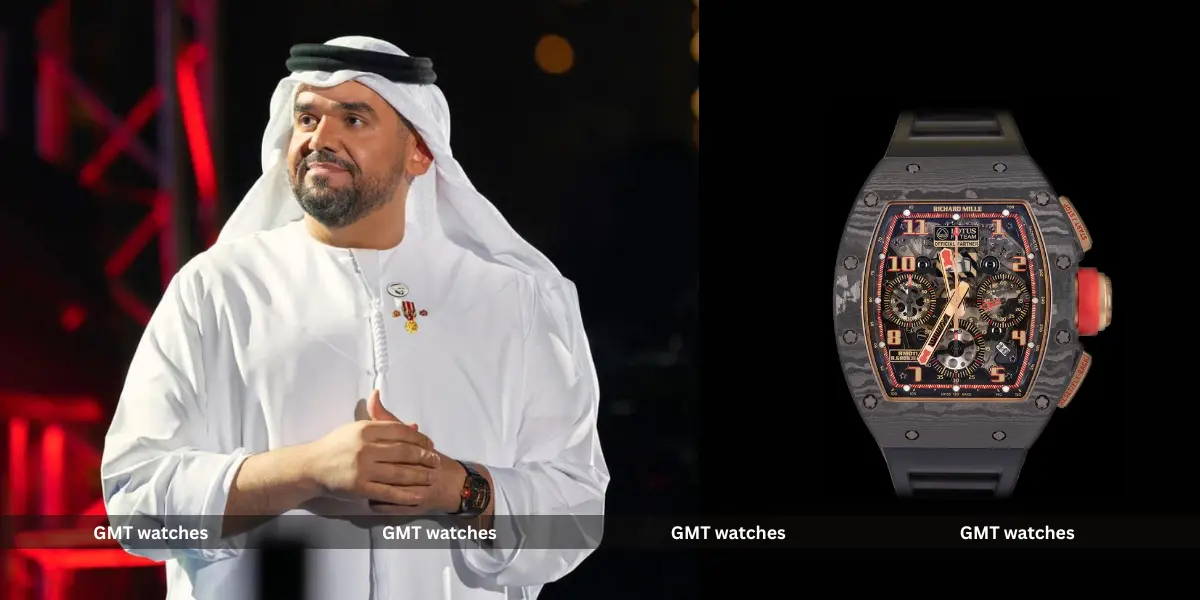
Now shift slightly into the cultural side, and the tone changes. Hussain Al Jassmi represents a different kind of presence. His watch choice, often linked to the Richard Mille RM 011, tells you something immediately. It’s modern, bold, and technically impressive without feeling disconnected from tradition.
That balance matters. He’s not trying to look like a Western pop star. The watch complements his image as a regional icon who operates globally. Richard Mille, especially models like the RM 011, carries a certain energy. It’s sporty, high-tech, and unmistakably expensive, but it also signals movement, creativity, and relevance.
You can almost see how the watch fits into performances, public appearances, and media moments. It doesn’t overpower his identity. It enhances it. That’s a recurring pattern with UAE celebrities. The watch supports the narrative rather than replacing it.
Omar Abdulrahman
Omar Abdulrahman (Arabic: عمر عبد الرحمن), nicknamed “Amoory,” is a retired Emirati footballer celebrated for his playmaking artistry. Born September 20, 1991, in Riyadh, Saudi Arabia, he became one of the most iconic midfielders in the history of Emirati and Asian football. His creativity, vision, and dribbling flair made him the face of UAE football throughout the 2010s.
Key facts:
- Full name: Omar Abdulrahman Ahmed Al Raqi Al Amoudi
- Born: September 20, 1991 (Riyadh, Saudi Arabia)
- Height: 1.73 m (5′8″)
- Position: Attacking midfielder
- Clubs: Al Ain, Al Hilal, Al Jazira, Shabab Al Ahli, Al Wasl
- Retired: November 6, 2025
- Major honor: AFC Player of the Year (2016)
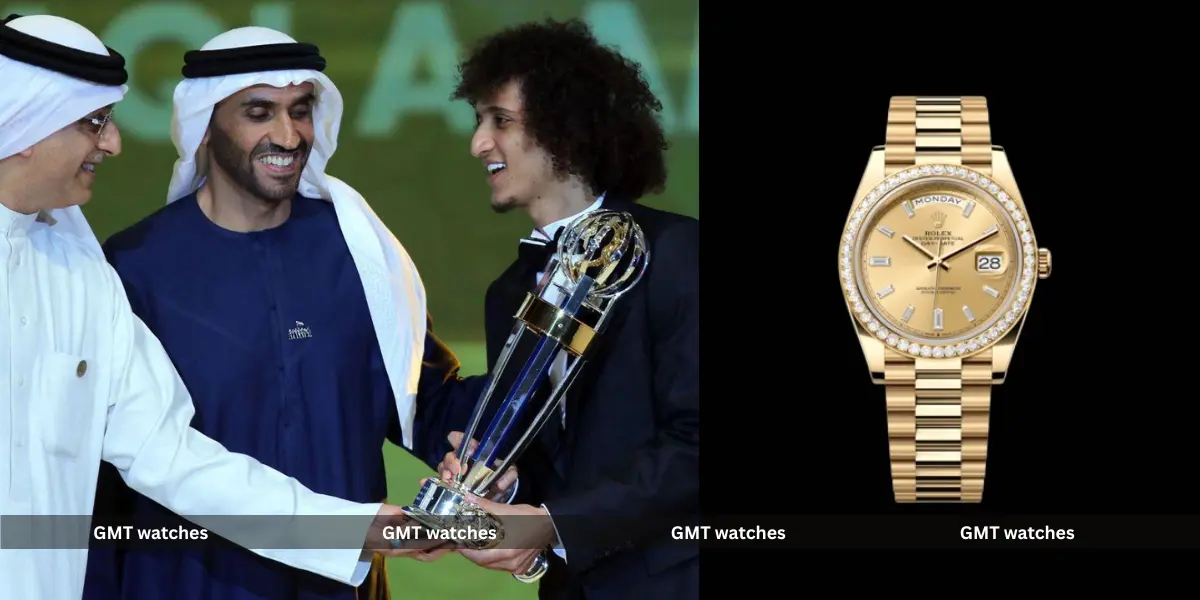
Athletes in the UAE tend to lean toward something different. Not minimal, but grounded. Omar Abdulrahman, often associated with the Rolex Day-Date Watches, reflects that perfectly.
The Day-Date is one of those watches that doesn’t need explanation. It’s recognizable, respected, and carries history. For someone like Amoory, whose reputation is built on skill and consistency rather than noise, the choice makes sense. It’s not experimental. It’s not risky. It’s stable, much like his style of play during his peak years.
There’s also a practical layer here. Athletes tend to favor watches that transition easily between formal events and everyday wear. The Day-Date does that without effort. It’s versatile in a way that aligns with how athletes move between public appearances, training environments, and private life.
Rashed Belhasa
Rashed Saif Belhasa, known online as Money Kicks, is a Dubai-born Emirati influencer, YouTuber, entrepreneur, and amateur boxer. Born on January 5, 2002, he rose to fame showcasing his lavish sneaker collection and celebrity encounters, evolving into one of the Middle East’s most recognizable young digital entrepreneurs.
Key facts:
- Full name: Rashed Saif Belhasa
- Born: January 5, 2002 (Dubai, UAE)
- YouTube subscribers: ≈ 3.8 million (as of 2024)
- Business ventures: KA-1 streetwear brand; Money Kicks lifestyle label
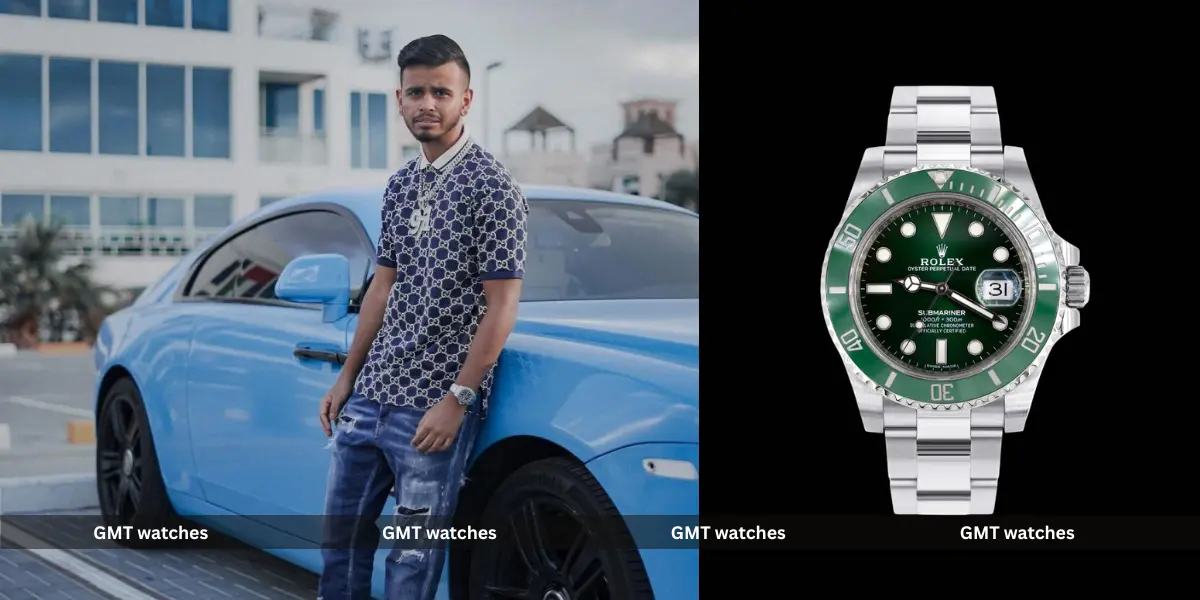
Then you have someone like Rashed Belhasa, and the tone shifts again. Younger, louder, more experimental. His world is built around visibility, and his watch choices follow that logic.
You’ll see a mix of high-impact pieces. Think Richard Mille, Audemars Piguet, sometimes even customized designs. These aren’t subtle watches. They’re meant to be seen, photographed, and shared. That’s not a flaw. It’s strategy.
Dubai’s younger generation operates differently. Social media is part of identity, not just promotion. The watch becomes content. It’s part of the visual language that defines influence. And in that context, louder pieces make sense. They create recognition instantly, which is exactly what this space demands.
Hamdan bin Mohammed Al Maktoum
Sheikh Rashid bin Dalmook Al Maktoum is a Dubai royal and champion endurance rider representing the United Arab Emirates. He is known both for his competitive success in international equestrian events and for leading Dubai’s major horse-racing institutions as chairman of the Dubai Racing Club and the Dubai Equestrian Club.
Key facts:
- Full name: Sheikh Rashid bin Dalmook Al Maktoum
- Nationality: Emirati (UAE)
- Sport: Endurance and equestrian racing
- Clubs: MRM Stables, Dubai Equestrian Club
- Leadership roles: Chairman, Dubai Racing Club (since 2021)
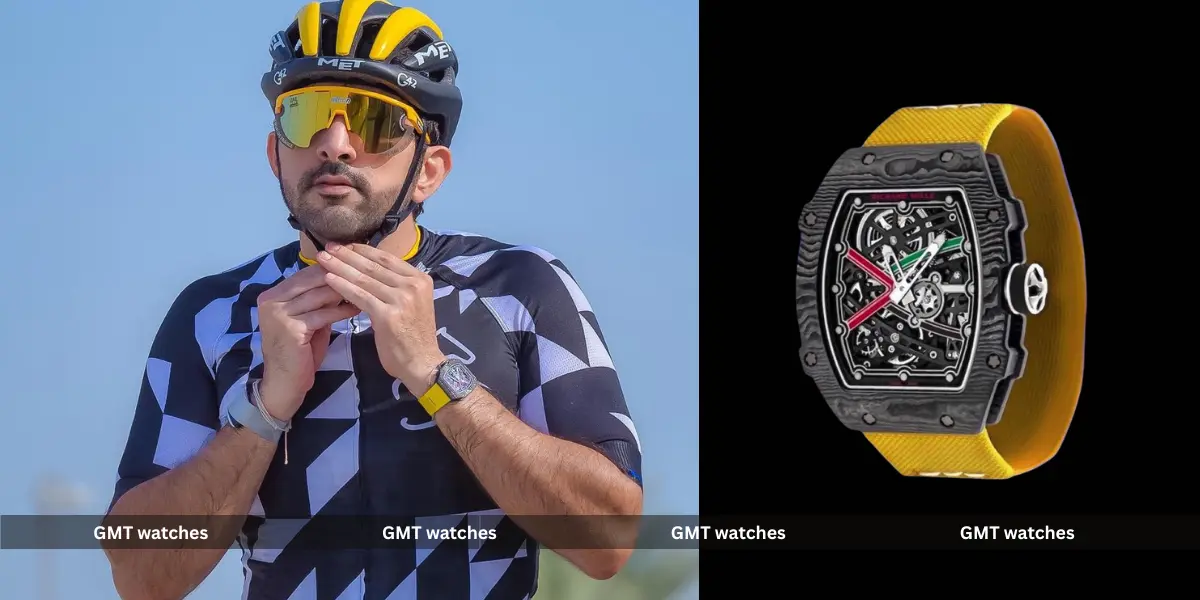
Sheikh Hamdan presents a more layered approach. His public image blends leadership, sport, culture, and accessibility. That mix reflects in watch choices that are neither overly conservative nor aggressively modern.
You’ll often see pieces that sit comfortably between heritage and innovation. Not too experimental, but not rigid either. This middle ground is difficult to achieve, but when it works, it feels natural. That’s what makes his style influential. It doesn’t feel constructed.
There’s also a consistency in how everything aligns. Clothing, activity, environment, and watch all feel connected. That’s something you don’t always see elsewhere. In the UAE, especially at this level, image is cohesive. The watch is just one part of a larger, well-balanced presentation.
Ahmed Saif Belhasa
Ahmed Saif Belhasa is an Emirati businessman, entrepreneur, and philanthropist based in Dubai. He is the founder and chairman of the Belhasa Group of Companies and a leading figure in the UAE’s construction, real estate, and service sectors. His leadership has made Belhasa one of the most diversified and influential family-owned conglomerates in the Gulf region.
Key facts:
- Position: Chairman, Belhasa Group of Companies
- Headquarters: Deira, Dubai, United Arab Emirates
- Business interests: Real estate, construction, automotive, education, technology, travel, and finance
- Notable roles: President, Arab Contractors Federation; Chairman, UAE Contractors Association
- Founded: Belhasa Group (1960s)
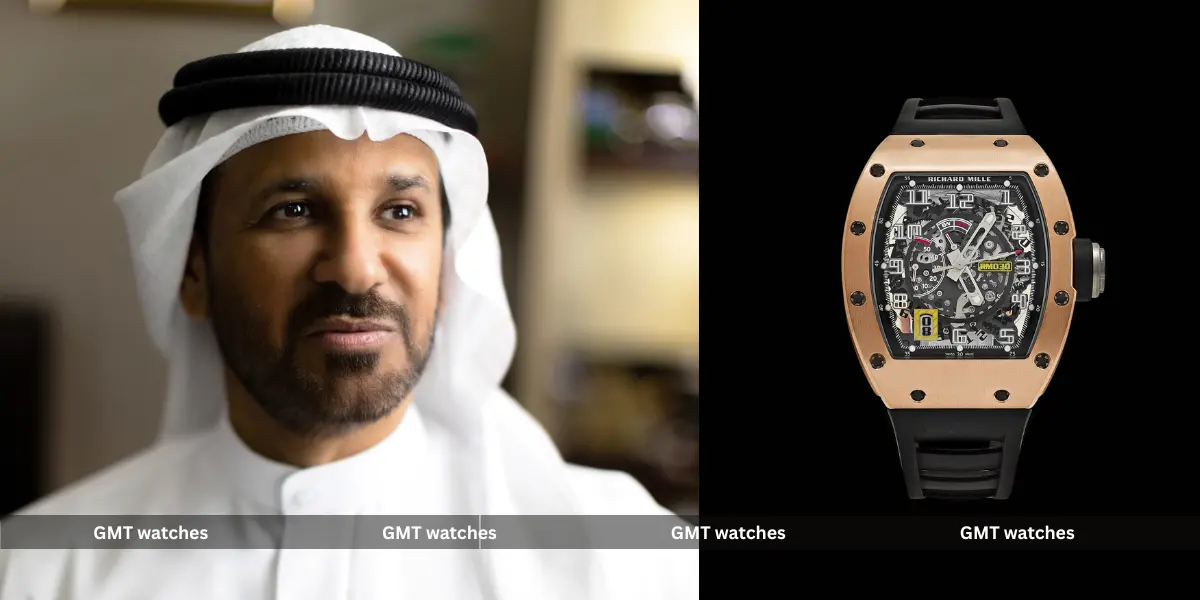
In the business world, the approach shifts again. Less experimentation, more continuity. Ahmed Saif Belhasa represents a generation where watches are tied closely to legacy and credibility.
You’re more likely to see classic pieces here. Watches that have been relevant for decades, not just trending in the moment. The focus is on reliability and recognition rather than novelty. That choice communicates stability, which is essential in business environments where trust matters more than attention.
It’s not about standing out visually. It’s about reinforcing a long-established identity. That difference is subtle but important. It shows how watch culture in the UAE adapts across different sectors without losing its core sense of purpose.
What These Watches Actually Say
If you step back and compare all these figures, a pattern starts to form. It’s not about price alone. It’s about alignment. The watch needs to match the role, the personality, and the audience.
| Category | Typical Watch Style | What It Communicates |
|---|---|---|
| Royal / Government | Understated luxury | Control, discipline, authority |
| Cultural Figures | Modern high-end | Relevance, creativity, global presence |
| Athletes | Classic luxury | Stability, consistency, respect |
| Influencers | Bold statement pieces | Visibility, individuality, trend awareness |
| Business Leaders | Timeless classics | Trust, legacy, reliability |
This table doesn’t capture everything, but it highlights the structure behind what might otherwise look random. The choices are deliberate, even when they appear effortless.
Popular Watch Models Among UAE Celebrities
There are certain models that keep appearing across different personalities, though each one is used differently depending on context.
| Watch Model | Seen On | Why It Works |
|---|---|---|
| Rolex Day-Date | Athletes, business figures | Recognizable, versatile, authoritative |
| Richard Mille RM 011 | Artists, influencers | Technical, bold, visually distinct |
| Audemars Piguet Royal Oak | Mixed audience | Balanced design, strong identity |
| Patek Philippe Nautilus | Business and elite circles | Subtle luxury, long-term value |
| Rolex Daytona | Younger public figures | Sporty, iconic, adaptable |
What’s interesting is not just which watches are popular, but how they’re worn. The same watch can feel completely different depending on who’s wearing it and how it fits into their overall image.
The Subtle Difference Between Showing and Signaling
One thing that stands out in the UAE is the difference between showing wealth and signaling position. They’re not the same, even though they often overlap.
A loud watch might show wealth. A carefully chosen watch signals something deeper. It tells you how the person wants to be perceived, not just what they can afford. That distinction is what separates random luxury from curated identity.
You’ll notice that the more influential the individual, the more controlled the watch choice tends to be. Not always smaller, not always cheaper, but more intentional. That’s where the real difference lies.
How Dubai’s Environment Shapes Watch Choices
Dubai itself plays a role in all of this. It’s a city that moves fast, but it also values presentation. The environment encourages visibility, but not chaos. There’s an expectation of polish, even in casual settings.
Watches fit into that environment naturally. They’re visible enough to matter, but subtle enough to remain personal. That balance makes them more relevant here than in many other places.
You also have a mix of cultures influencing style. European luxury, Middle Eastern tradition, global trends. All of it blends into something that feels distinctively Dubai. Watches become part of that blend, adapting without losing their identity.
The Reality Behind the Image
It’s easy to assume that UAE celebrities simply pick the most expensive watches available. That’s not really how it works. There’s more filtering involved than people realize.
Some watches are avoided because they don’t align with cultural expectations. Others are chosen because they fit specific occasions or roles. Even within the same individual’s collection, you’ll see variation depending on context.
This is why trying to copy these choices without understanding the context often feels off. The watch alone doesn’t create the image. It supports something that’s already there.
Why This Matters More Than It Seems
At first glance, this might seem like a niche topic. Watches, celebrities, personal style. But it actually reveals something broader about how identity is constructed in the UAE. There’s a level of intentionality that runs through everything. From leadership to entertainment to business, presentation is rarely accidental. Watches are just one of the more visible pieces of that puzzle.
Once you start noticing it, it becomes difficult to ignore. The differences between individuals become clearer. The logic behind their choices starts to make sense. And what initially looked like simple luxury turns into something more structured, more deliberate.
FAQ
Do UAE celebrities only wear luxury watches like Rolex or Richard Mille?
Not necessarily, even though brands like Rolex, Richard Mille, and Patek Philippe show up often. The choice usually depends on the individual’s role, image, and public presence rather than just price. Some prefer understated pieces that blend into their overall style, while others go for bold watches that stand out immediately.
Why do many UAE celebrities prefer classic models like the Rolex Day-Date?
Because it carries recognition without needing explanation. Watches like the Day-Date signal stability, status, and long-term value, which aligns well with athletes, business figures, and public personalities who want a clean and respected image. It’s less about trend and more about consistency.
Are flashy watches more common among younger UAE influencers?
Yes, generally speaking. Younger figures like digital creators or influencers tend to wear more visually striking pieces, often from brands like Richard Mille or Audemars Piguet. These watches photograph well and create instant visual impact, which matters in a social media-driven environment.
Do UAE royals wear very expensive watches publicly?
They often do, but not in an obvious way. The watches are usually high-end, but the design tends to be restrained and refined rather than loud. The focus is on elegance and control, not drawing attention to the watch itself.
Is watch choice in the UAE more about status or personal identity?
It’s a mix of both, but identity plays a bigger role than most people expect. The watch usually aligns with how the person wants to be perceived, whether that’s authoritative, creative, modern, or traditional. In many cases, the watch supports the image rather than defining it.