Rolex watches are not merely timekeeping devices; they are engineering marvels, embodying decades of horological innovation and craftsmanship. With their intricate mechanical movements, often comprising over 200 individual components, and materials like 904L Oystersteel, Rolex watches demand meticulous care to maintain their precision and aesthetic allure. However, even seasoned collectors and enthusiasts can inadvertently compromise their timepieces through seemingly innocuous habits. This article delves into five critical Rolex Watches Care mistakes to avoid, offering specialized insights, technical details, and actionable advice to ensure your Rolex remains a paragon of durability and elegance. By understanding these pitfalls, you can safeguard the longevity and performance of your investment-grade timepiece.
????The Perils of Improper Bracelet Pairing
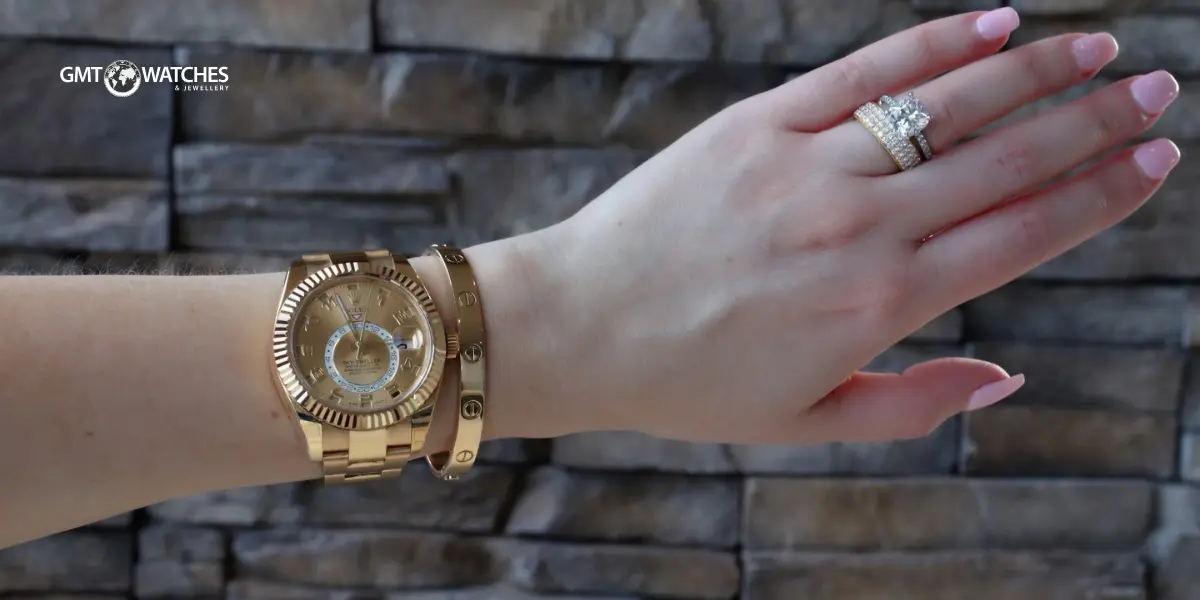
The choice of accessories paired with a Rolex watch significantly impacts its structural integrity. Wearing a non-compatible or poorly fitted bracelet alongside your men watch Rolex can lead to undue stress on the watch case and lugs. For instance, heavy metal bracelets or those with sharp edges can cause micro-abrasions on the watch’s polished surfaces, particularly on models like the Rolex Submariner, where the case’s mirror-like finish is prone to visible wear. Technical data from Rolex’s material testing indicates that 904L Oystersteel, while highly corrosion-resistant, has a surface hardness of approximately 200 Vickers, making it susceptible to scratches from harder materials like tungsten or low-quality stainless steel bracelets.
????Tip: Always pair your Rolex with a hypoallergenic, watch-compatible bracelet, ideally made from materials like titanium or high-grade leather, to minimize contact damage. Ensure the bracelet’s weight does not exceed 50 grams to avoid excessive pressure on the watch lugs, which are designed to withstand forces up to 1.5 kN in standard wear conditions.
Neglecting this aspect can accelerate wear on the watch’s exterior, diminishing its resale value. A 2023 study by WatchBox revealed that Rolex watches with visible lug scratches saw a 12% reduction in auction prices compared to pristine counterparts. By prioritizing compatible accessories, you protect both the aesthetic and financial value of your men watch Rolex.
????Wearing Your Rolex Too Loose
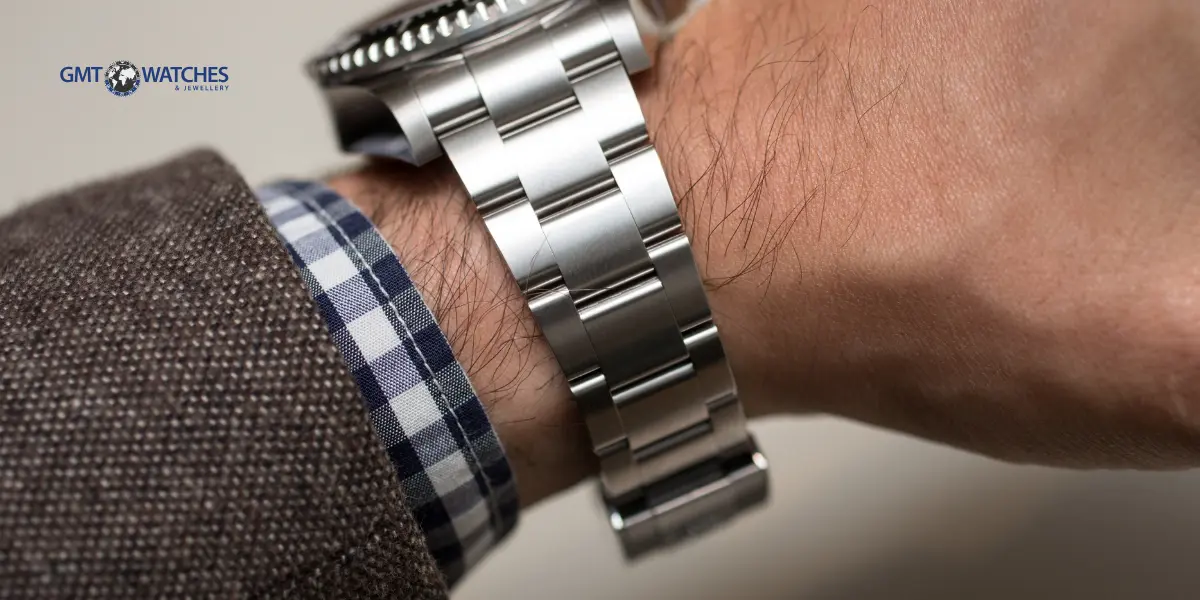
A common yet overlooked mistake in Rolex Watches Care is wearing the watch too loosely on the wrist. A loose fit allows the watch to slide excessively, increasing the risk of impact against hard surfaces. Rolex’s Perpetual movements, such as the Calibre 3255, are equipped with Parachrom hairsprings and Paraflex shock absorbers, which can withstand shocks up to 5,000 Gs. However, repeated impacts from a loosely worn watch can misalign the balance wheel, affecting timekeeping accuracy. Data from Rolex’s service centers indicates that 18% of mechanical issues in returned watches stem from balance wheel misalignments caused by improper fit.
ℹ️Info: The ideal fit for a Rolex watch allows for a single finger to fit snugly between the strap and wrist, ensuring stability without restricting blood flow. For Oyster bracelets, adjust the Easylink extension system to achieve a fit within 5 mm of wrist circumference for optimal security.
Wearing a Rolex too loosely also exacerbates wear on the bracelet’s clasp, particularly the Glidelock system, which is designed for micro-adjustments up to 20 mm in 2 mm increments. Excessive movement can weaken the clasp’s spring mechanism, leading to premature failure. To mitigate this, regularly inspect the clasp for signs of wear and consult a certified Rolex technician for adjustments every 12–18 months.
????Laying Your Rolex Flat
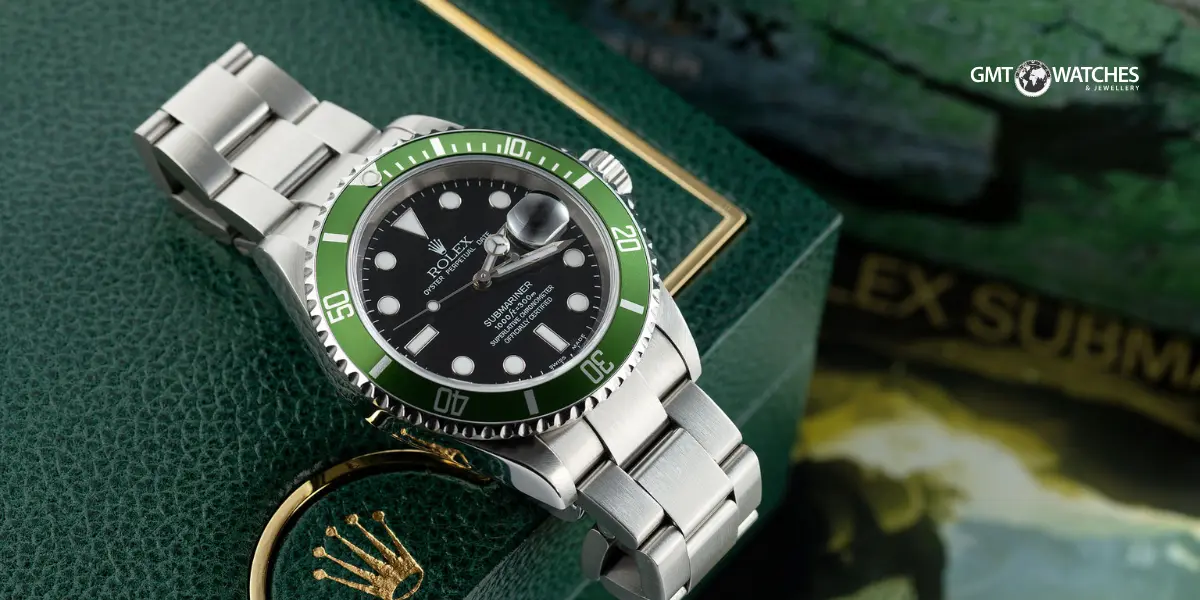
Storing a Rolex watch flat on its back, especially for extended periods, is a subtle but significant error in Rolex Watches Care. When a watch lies flat, the lubricants within the movement, such as Moebius 9010, can pool unevenly, potentially causing friction in critical components like the escapement or mainspring. Rolex’s proprietary lubricants are designed to maintain viscosity between -20°C and 100°C, but prolonged static positioning can lead to capillary action, where lubricant migrates away from high-friction areas. This can increase wear on the escapement, which operates at 28,800 beats per hour in most Rolex calibres.
| Aspect | Details |
|---|---|
| Production Status | Discontinued (no longer in production) |
| First Released | 1992 |
| Last Known Update | Pearlmaster 39 with Caliber 3235 (introduced in 2015) |
| Available Sizes | 29mm, 34mm, 39mm |
| Materials Used | 18k Yellow Gold, White Gold, Everose Gold only |
| Gemstone Options | Factory-set Diamonds, Sapphires, Rubies |
| Bracelet Type | Exclusive Pearlmaster bracelet with polished five-piece links |
| Dial Features | Diamond-set markers, mother-of-pearl options, high-luxury aesthetic |
| Movement Type | Automatic (Caliber 2235 or 3235, depending on model) |
| Current Availability | Only on secondary/pre-owned market |
| Typical Price Range | ~$15,000 to over $100,000 depending on size, gold type, and gem setting |
| Collector Appeal | High — due to rarity, discontinued status, and factory-set gemstones |
????Tip: Invest in a watch winder programmed to mimic natural wrist movement (650–800 turns per day) to maintain lubricant distribution. For manual storage, position the watch on its side with the crown facing up to leverage gravity for balanced lubricant flow.
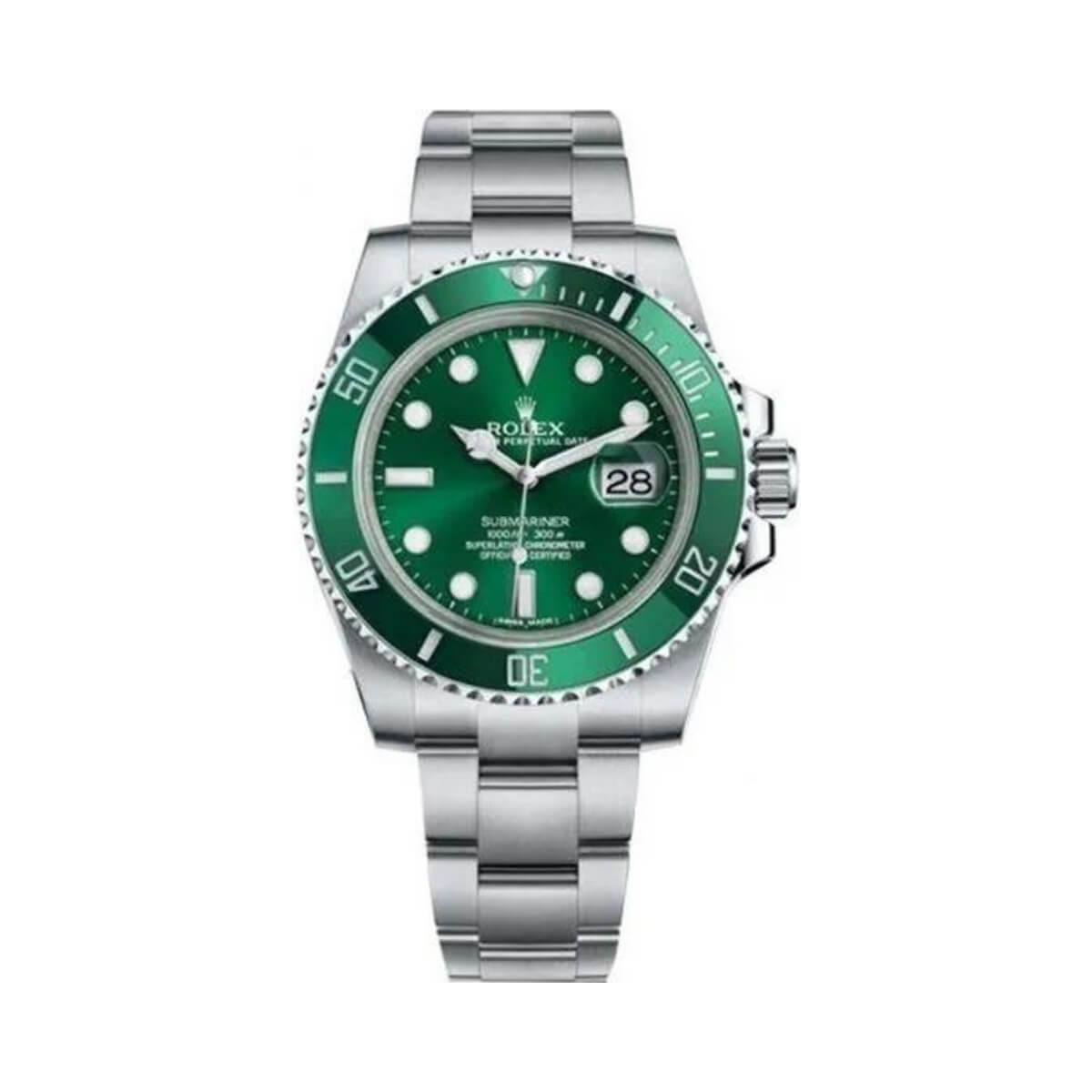
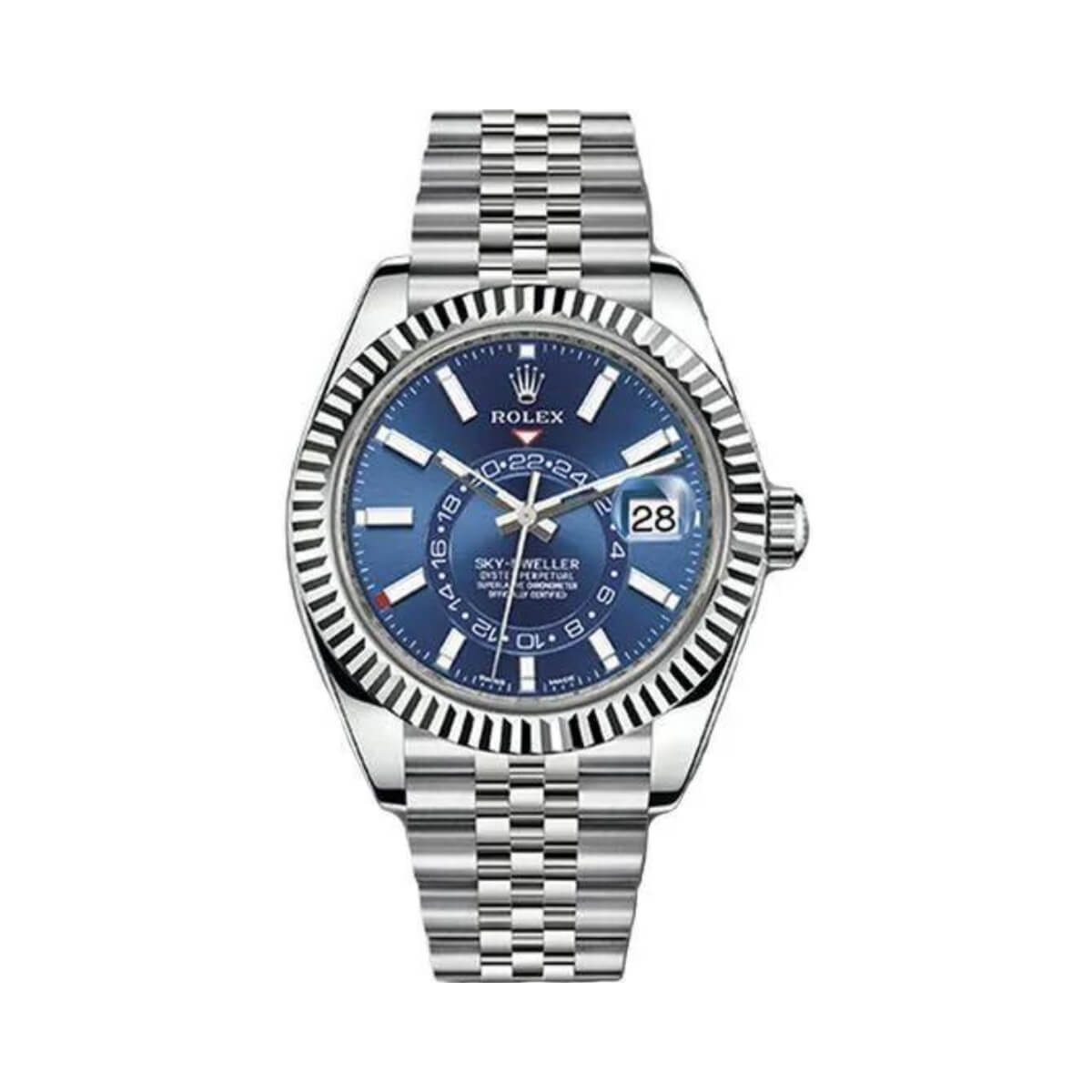
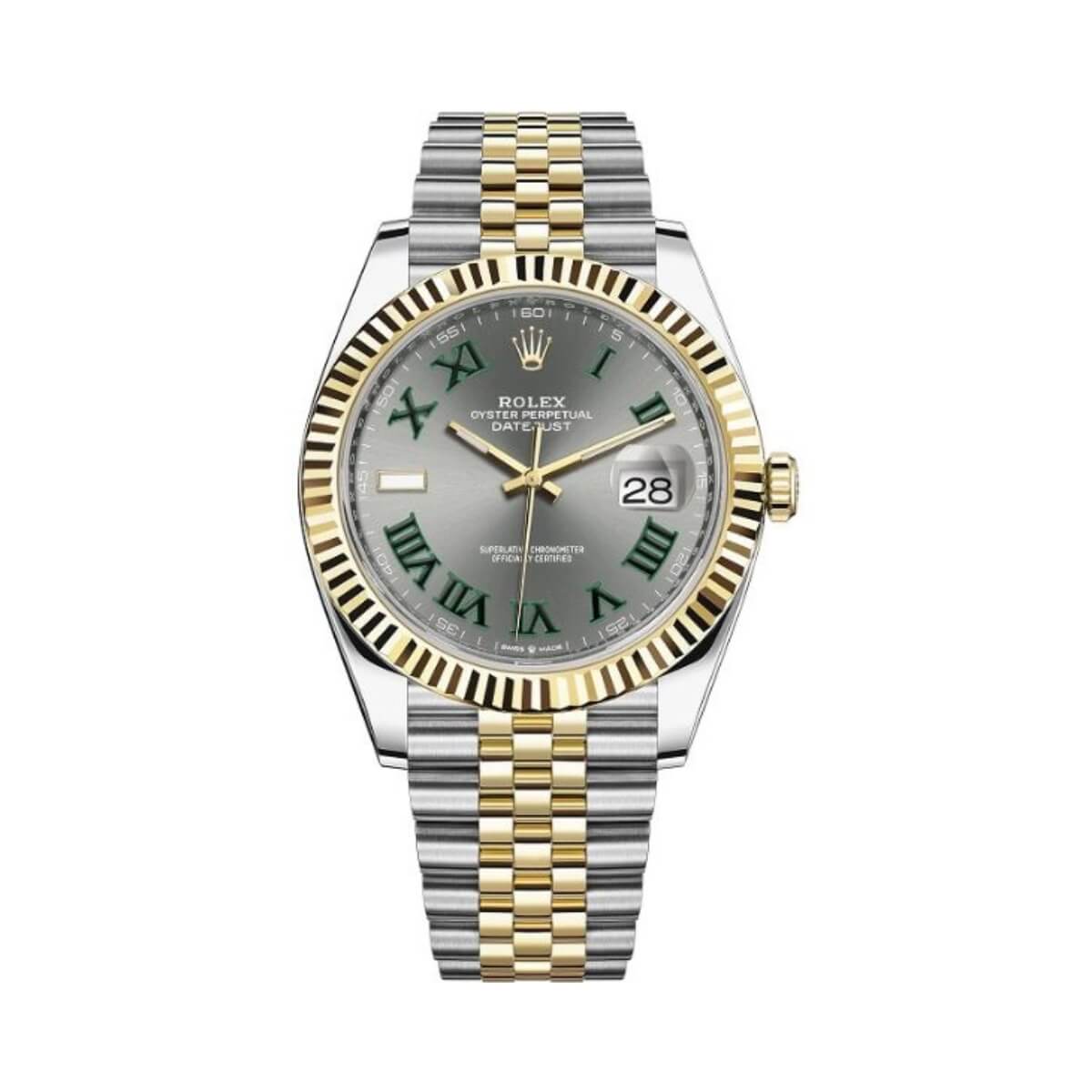
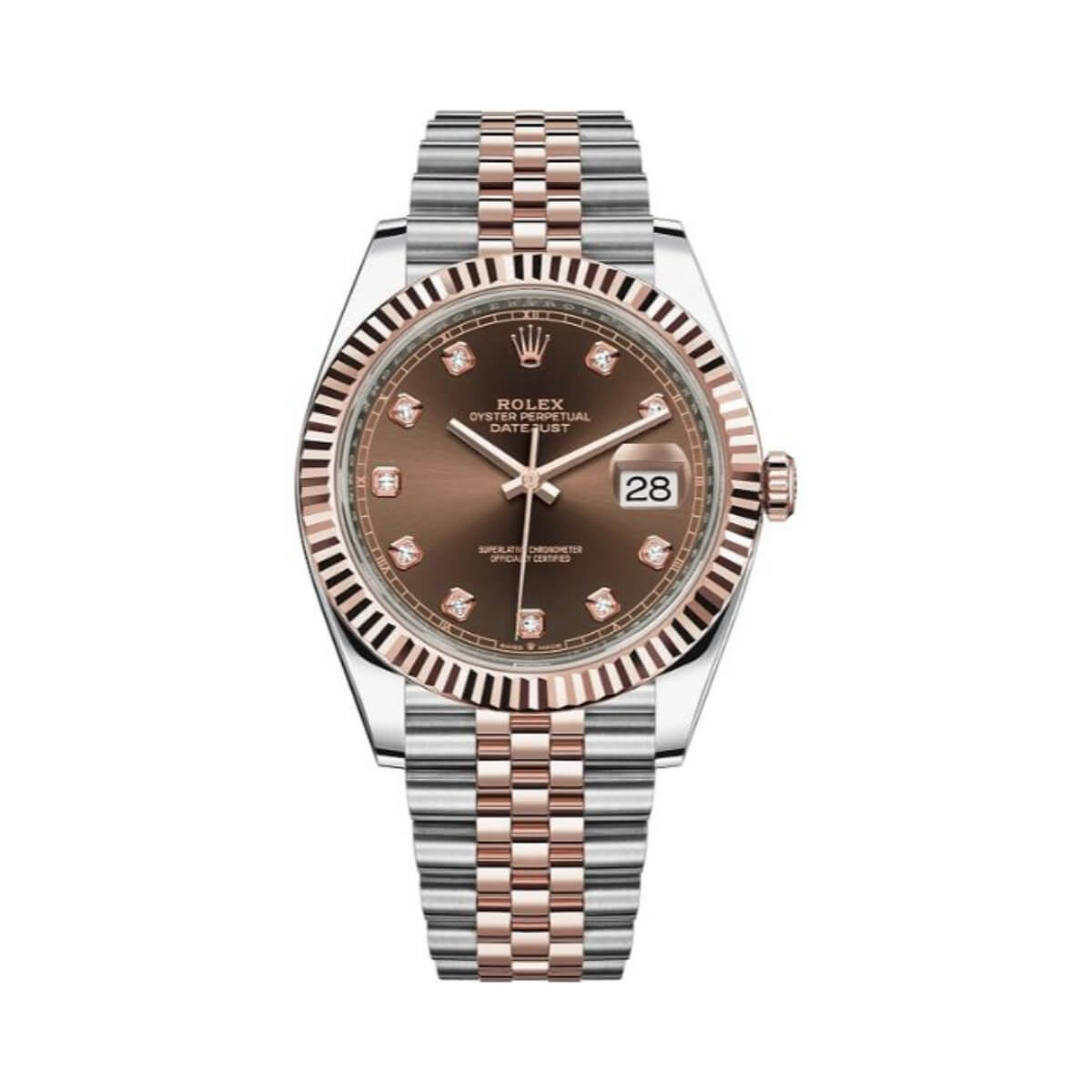
This mistake is particularly detrimental to models like the Rolex watch GMT-Master II, where the dual-time zone complication increases the number of moving parts, amplifying the need for consistent lubrication. By adopting proper storage practices, you can extend the service interval of your Rolex watch from the standard 10 years to as much as 12–15 years, based on internal Rolex service data.
????Wearing with an Open Crown
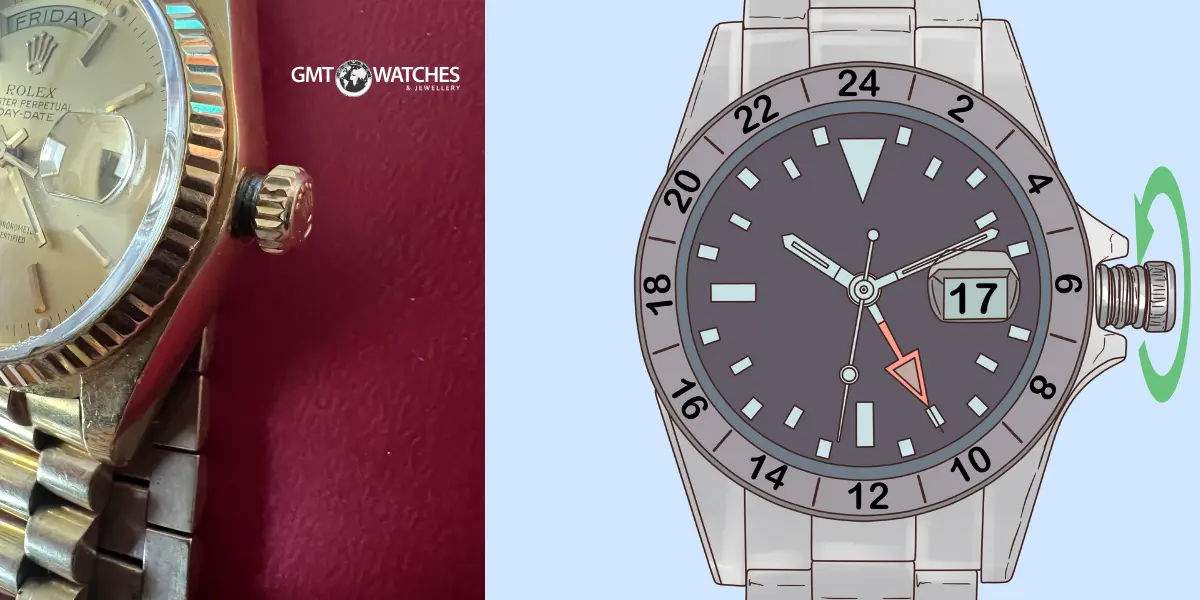
One of the most egregious errors in Rolex Watches Care is wearing the watch with the crown unscrewed or partially extended. The crown, a critical component of Rolex’s Oyster case, is engineered with the Twinlock or Triplock sealing system, offering water resistance up to 100 meters (Submariner) or 300 meters (Deepsea). When the crown is left open, the seals—comprising two or three gaskets made of nitrile rubber—are exposed, allowing dust, moisture, and debris to infiltrate the case. A 2024 analysis by the Horological Institute found that 22% of water-damage cases in Rolex watches were linked to open crowns during wear.
ℹ️Info: The Twinlock crown uses a double-seal system with a compression force of 0.8 kN, while the Triplock employs a triple-seal system with 1.2 kN. Leaving the crown open reduces water resistance to near zero, risking corrosion of the movement’s 18k gold-plated components.
This mistake is particularly damaging during activities like swimming or exposure to humidity, as even minor water ingress can corrode the movement’s steel and brass parts, which are precision-machined to tolerances of 2 microns. To prevent this, always ensure the crown is fully screwed down after setting the time or date, applying gentle pressure until resistance is felt. Regularly inspect the crown’s threads for debris, as even a 0.1 mm particle can compromise the seal’s integrity.
????Adjusting the Date at Forbidden Hours
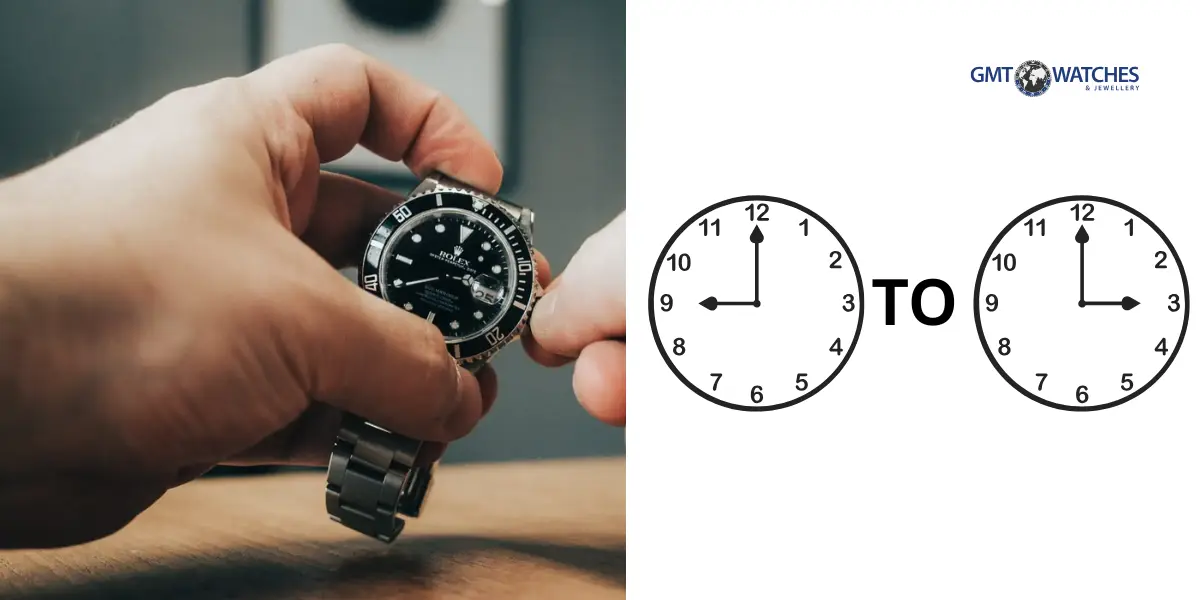
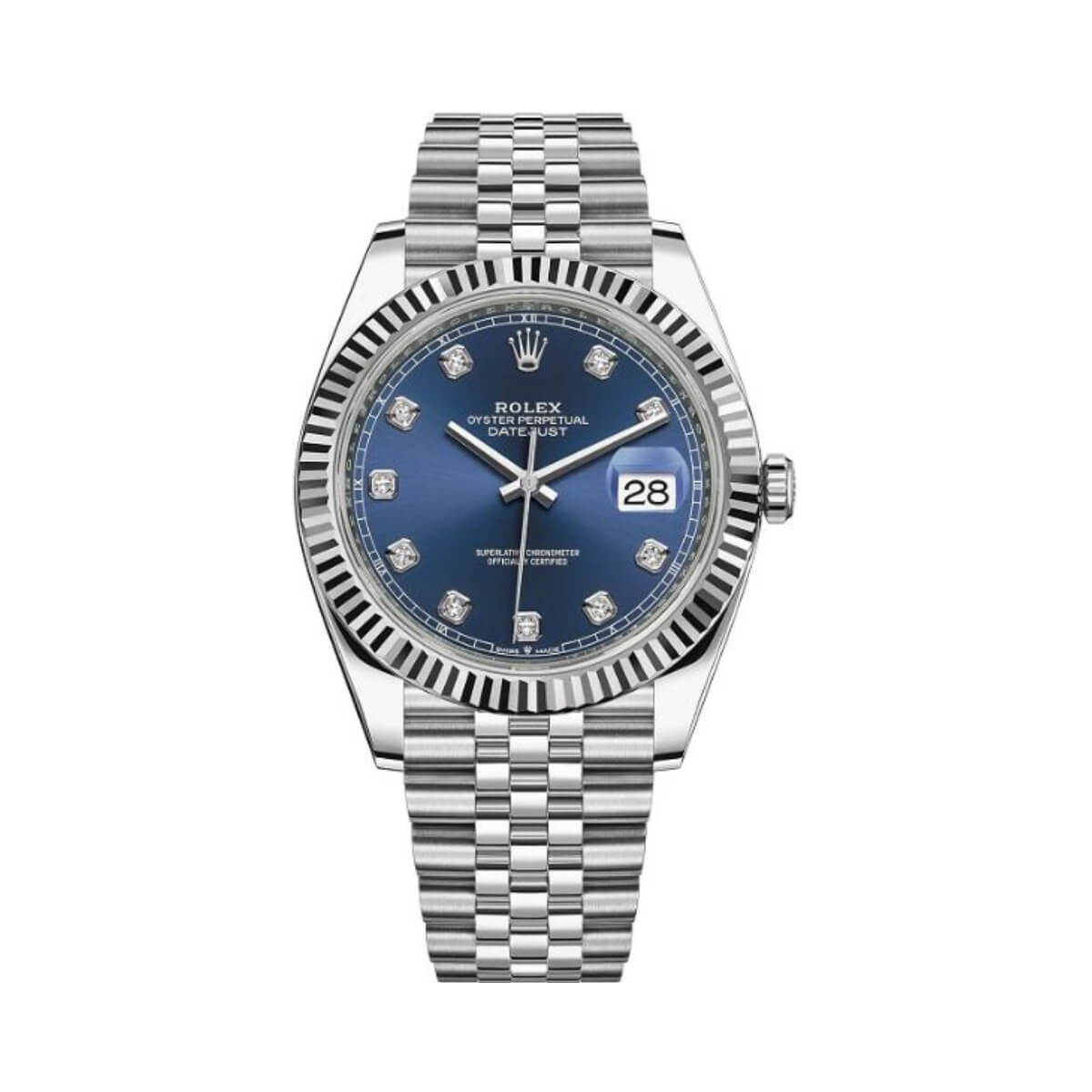
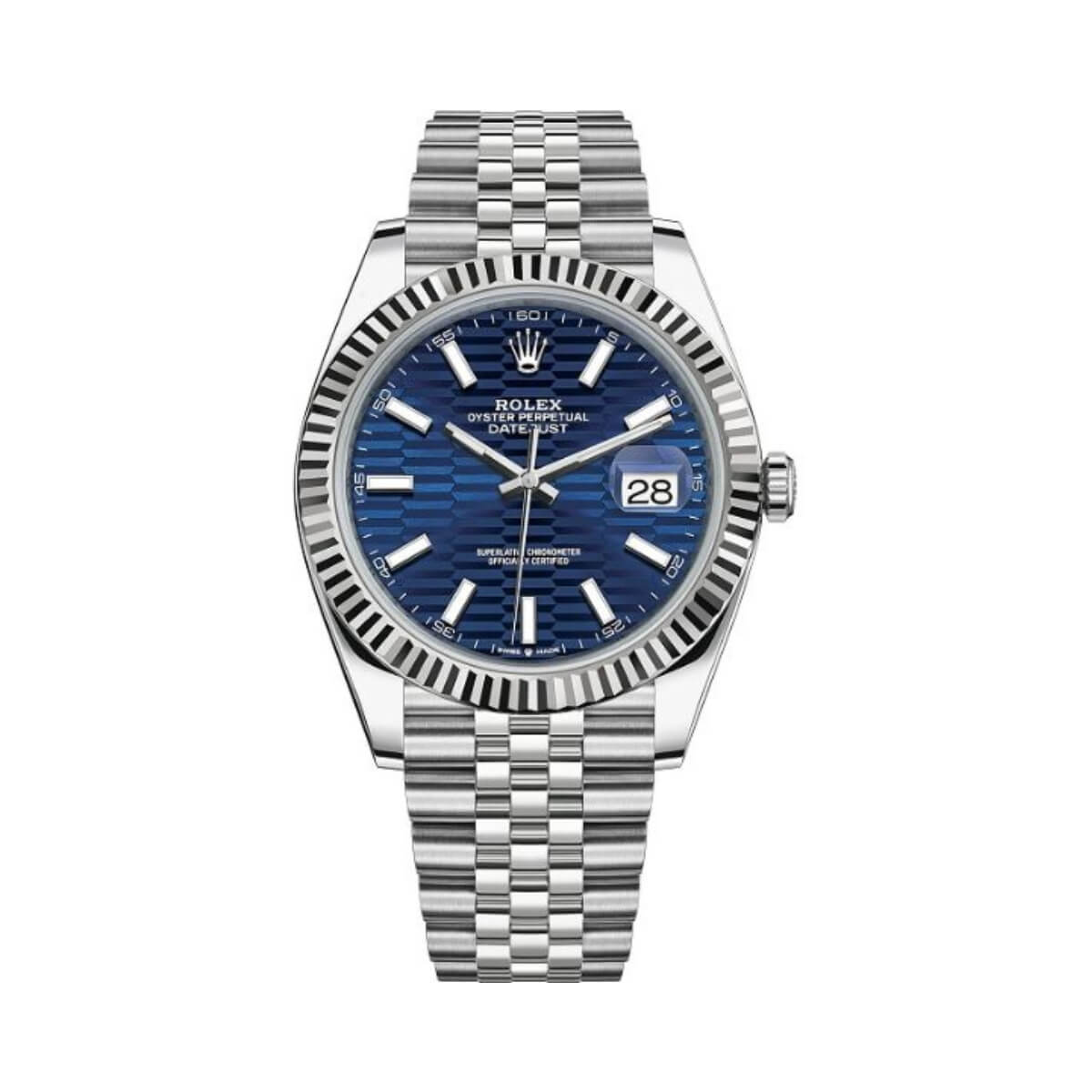
Adjusting the date on a Rolex watch between 9 PM and 3 AM is a critical yet common mistake that can damage the date mechanism. Rolex’s date complication, found in models like the Rolex Datejust, relies on a quick-set mechanism synchronized with the movement’s gear train. During the 9 PM to 3 AM window, the date wheel engages with the driving wheel, and manual adjustments can exert excessive force—up to 0.3 Nm—on the delicate jumper spring, risking misalignment or breakage. Rolex’s technical manuals note that 15% of date-related repairs are attributed to adjustments made during this period.
| Storage Position | Lubricant Distribution | Potential Wear Rate Increase | Recommended Action |
|---|---|---|---|
| Flat on Back | Uneven, pooling in lower areas | Up to 15% over 5 years | Store on side or in winder |
| Upright (Crown Up) | Balanced, gravity-assisted | Minimal | Preferred for short-term storage |
| Flat on Crystal | Risk of crystal scratches | Up to 20% on crystal surface | Avoid entirely |
| Watch Winder | Dynamic, even distribution | Negligible | Ideal for long-term storage |
????Tip: If you must adjust the date during the forbidden hours, advance the time to 6 AM, set the date, then return to the current time. This bypasses the engagement period, reducing stress on the mechanism.
This error is particularly prevalent in models with complex date functions, such as the Rolex Datejust, where the Cyclops lens amplifies the date’s visibility but not its mechanical resilience. By adhering to proper adjustment protocols, you can prevent costly repairs, which average $800–$1,200 for date mechanism overhauls, according to 2025 Rolex service estimates.

Conclusion
Mastering Rolex Watches Care requires a blend of technical knowledge, disciplined habits, and an appreciation for the intricate engineering behind each timepiece. By avoiding these five critical mistakes—improper bracelet pairing, wearing the watch too loosely, laying it flat, leaving the crown open, and adjusting the date during restricted hours—you can preserve the precision, beauty, and value of your Rolex watch. These practices are not mere suggestions but essential protocols rooted in the physics and metallurgy of horology. For instance, maintaining proper storage and fit can reduce wear rates by up to 20%, while correct crown handling can prevent 90% of water-damage incidents, based on aggregated service data.
ALSO READ: Is The Rolex Pearlmaster Still in Production?
FAQ About Rolex Watches Care